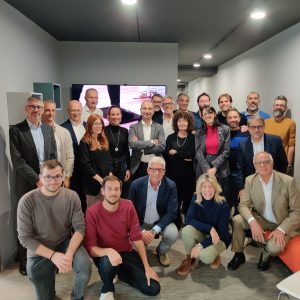
On March 31, 2026, in the beautiful Politecnico di Milano’s setting, Giacomo Villa received a PhD degree in Biomedical Engineering, discussing a thesis focused on the validation and field application of inertial sensors formotion analysis.
Giacomo Villa’s study, entitled “Validation, Methodological Advancements, and Field Applications of Wearable Inertial Sensors for Human Motion Analysis.“, was developed under the supervision of Prof. Veronica Cimolin, with co-supervision by David Tacconi and Prof. Valentina Corino.
Giacomo Villa: a path between university, company and field experience
This doctorate is part of a path that James has built progressively between academic research and practical application in Euleria Health.

After graduating with a master’s degree in Biomedical Engineering (Biomechanics and Biomaterials) from the Polytechnic University of Milan, obtained with 110/110 cum laude, Giacomo Villa began working on motion analysis in sports. In parallel, he gained direct experience in the field as a soccer instructor, integrating technical observation and objective measurement.
In 2022-2023, Giacomo had already carried out an applied research activity in collaboration with AC Trento 1921 – youth sector., designing and conducting an annual study on the quantitative evaluation of motor performance.
And, as of February 2023, James is Executive PhD Candidate & Product Specialist in Euleria Health, where he is responsible for:
- Biomechanical research with inertial sensors and force platforms
- Transfer of results to real-world application contexts
- Development and validation of movement metrics
The goal of wearable sensor reliability research.
The dissertation “Validation, Methodological Advancements, and Field Applications of Wearable Inertial Sensors for Human Motion Analysis“ by Giacomo Villa addresses a well-known problem in biomechanics: if reference systems (optical motion capture and force platforms, in our case) offer high accuracy but are limited to controlled contexts, can accuracy and reliability be maintained when moving from the laboratory to the real world? And, if so, how?
The research therefore focused on the use of IMUs (Inertial Measurement Units) in the field, with the aim of verifying their:
- validity compared to the gold standard
- reliability in real-world settings
- operational usability in the field
The main results
James’ work has integrated multiple experimental studies, from the sports context to complex movement analysis.
Field monitoring
In a study of 128 young soccer players, wearable sensors showed:
- Ability to detect significant changes over time
- Applicability in uncontrolled settings
Estimation of jump height
In the comparison with laboratory systems, the following emerged:
- Very high correlations (>0.93)
- small deviations (by a few centimeters)
Numerical double integration (NDI) was found to be the most reliable method of investigation:

Dynamic movements (drop and squat jump)
The results show:
- Presence of systematic bias on some specific metrics
- high accuracy for jumpheight
- Good reliability, especially with repeated measurements
That is, the thesis has shown that IMUs can estimate key metrics such as jump height, contact time and range of motion with good accuracy, especially when rigorous protocols, proper calculation methods and standardized procedures are applied.
About the sensors’ performance
At the same time, Giacomo Villa’s research work underscores a key point: sensor performance is not universal, but depends on the motor task, the metrics observed, and the methodology used. Therefore, rather than as direct substitutes for laboratory systems, IMUs emerge as particularly effective tools for longitudinal monitoring, follow-up andfield use.
In the case of Euleria Health, Giacomo Villa’s research path also had concrete technology transfer value: the executive PhD performed within the company helped strengthen the link between scientific validation and real-world application, supporting objective movement assessment, real-time biofeedback , and monitoring in ecological settings.

Future outlook
This thesis also opens important perspectives for future developments, from validation in specific disease and sport populations to extension toward remote and long-term applications.
Wearable sensors have once again presented a real opportunity to bring biomechanics, the clinic and the real world closer together, but only when their use is supported by a solid methodological foundation and an ongoing validation process.